
Attorney Mahesh Kotuwella — A Lawyer Who Sold His Soul and Professional Ethics for Money
2026-05-24 1241
Did this (so-called) lawyer fail to understand that under both national and international child protection laws, the safety and dignity of a child stand far above “religious prestige” or “social status”?
If such a crime had happened to his own daughter or son, would he still speak in the same manner?
Here lies the dangerous contradiction, moral bankruptcy, and flawed logic within his statement.
We are prepared to give Attorney Mahesh Kotuwella every opportunity to respond to these allegations and defend his position.
“Lankanewsweek” is ready for the debate.
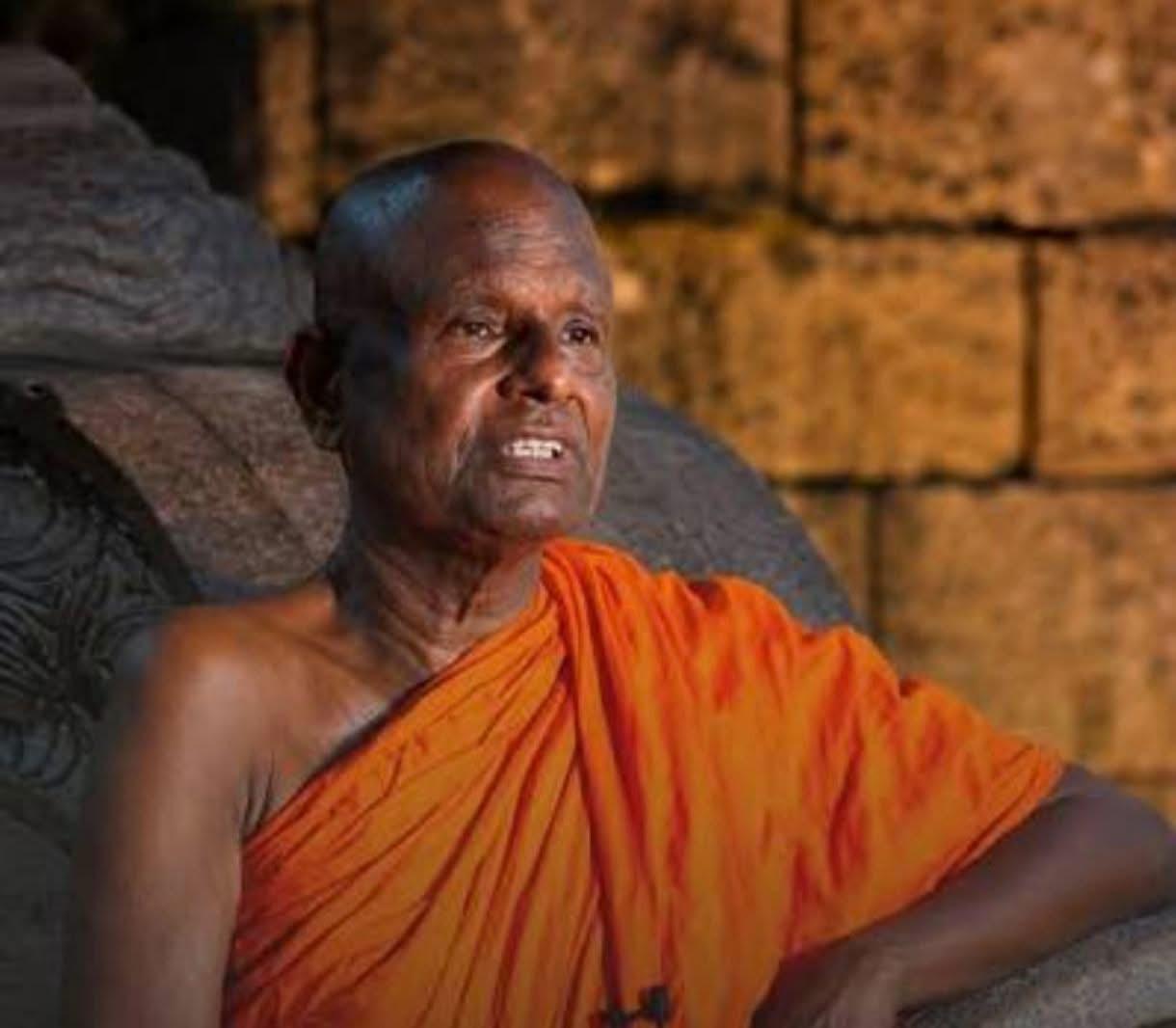
A lawyer undoubtedly has the legal right, ethical obligation, and professional duty to represent any accused person — even the worst criminal. But that defense belongs inside a courtroom. Once a court has delivered its ruling, no individual — not even a god — has the authority to undermine the rule of law through public agitation and emotional manipulation. That is what the supremacy of law truly means.
To Attorney Mahesh Kotuwella, one can only say: “Even Devadatta himself may not have imagined such moral decay.”
Now, let us come to the statement itself:
“There are countless girls being raped in difficult rural areas. The NGOs protesting against the Chief Monk remain silent about those cases.”
— Attorney Mahesh Kotuwella
When this statement is examined legally, morally, and logically, it becomes clear that it is not merely an argument about granting bail. It is a deeply dangerous attempt to normalize child sexual abuse while diverting the suffering of a victimized child into a political and religious controversy.
The gravest issue here is the attempt to use the argument, “children are abused elsewhere too,” in order to portray public outrage against the accused — the powerful religious leader, the Chief Incumbent of the Anuradhapura Atamasthana, Venerable Pallegama Hemarathana — as somehow unfair or politically motivated.
In legal and logical discourse, this is known as “whataboutery” — a deceptive argumentative fallacy. The existence of other crimes does not reduce the seriousness of this crime. The abuse of a thousand children does not make the abuse of one child acceptable.
A simple example makes this clear:
No one can justify murder by saying, “There are many other murders happening in the country.” Likewise, one cannot diminish the gravity of the sexual abuse of a minor girl by claiming, “There are other rapes too.”
Therefore, this argument is a classic example of false equivalence and a diversionary tactic.
Even more disturbingly, the lawyer attempts to shift public attention away from the central issue — the suffering of the child victim — and redirect it toward NGOs, women’s organizations, and so-called “anti-Buddhist forces.”
In other words, his statement deliberately attempts to distract society from the real and fundamental question:
“Was a minor girl sexually abused?”
Under Sri Lankan law, sexual crimes against children are not “private moral issues.” They are grave criminal offenses against the State itself.
More importantly, under the Sri Lankan Penal Code, child protection laws, the UN Convention on the Rights of the Child, and universally accepted international child protection principles, the safety and dignity of a child hold greater value than religious reputation or social influence.
Therefore, the fact that Pallegama Hemarathana is a “Chief Monk” does not place him above the law. On the contrary, the public trust vested in such a religious position imposes an even greater moral responsibility upon him.
Another critical point must also be understood:
Even if the accusation that “NGOs remain silent about other cases of child abuse” were true, it still does not legally invalidate the allegations in this particular case.
That argument is no different from saying:
“The police do not catch every thief, therefore this theft is not wrong.”
The fundamental principle of law is simple:
Even where selective enforcement exists, an offense remains an offense.
Likewise, the statement that “granting bail is the rule” is only a half-truth in legal terms.
Yes, under the Bail Act No. 30 of 1997, the principle states:
“Bail is the rule; refusal is the exception.”
However, this principle cannot be applied mechanically or blindly.
Particularly in cases where:
the victim is a minor,
the accused is a powerful religious or social figure,
there exists the possibility of influencing witnesses,
and the victim’s side is vulnerable,
the courts are required to exercise extraordinary caution and responsibility.
Therefore, the granting of bail does not amount to innocence.
Nor does bail mean that public criticism and social scrutiny must suddenly end.
Bail is merely a temporary legal freedom granted until investigations conclude. It is not an acquittal.
Perhaps the most morally dangerous aspect of this statement is the underlying suggestion that:
“Child abuse is normal because it happens elsewhere too.”
Statements of this nature:
deepen the pain of child victims,
create social protection for predators,
establish double standards for powerful individuals,
and strengthen the toxic culture of “Power Protects Predators.”
Most importantly, when allegations involve a Buddhist monk, it must be remembered that Buddhism itself teaches:
compassion,
protection of the weak,
restraint from sexual misconduct,
and moral self-discipline.
Therefore, labeling those who demand justice for children as “anti-Buddhist” directly contradicts the very ethical foundations of Buddhism itself.
A civilized society is not judged by how well it protects the powerful.
It is judged by how courageously it protects vulnerable children.
For all these reasons, Attorney Mahesh Kotuwella’s statement can be understood as:
legally flawed,
morally disgraceful toward the victim,
socially dangerous in its normalization of child abuse,
and a calculated attempt to use religious authority to weaken legitimate public criticism.






Lanka Newsweek © 2026